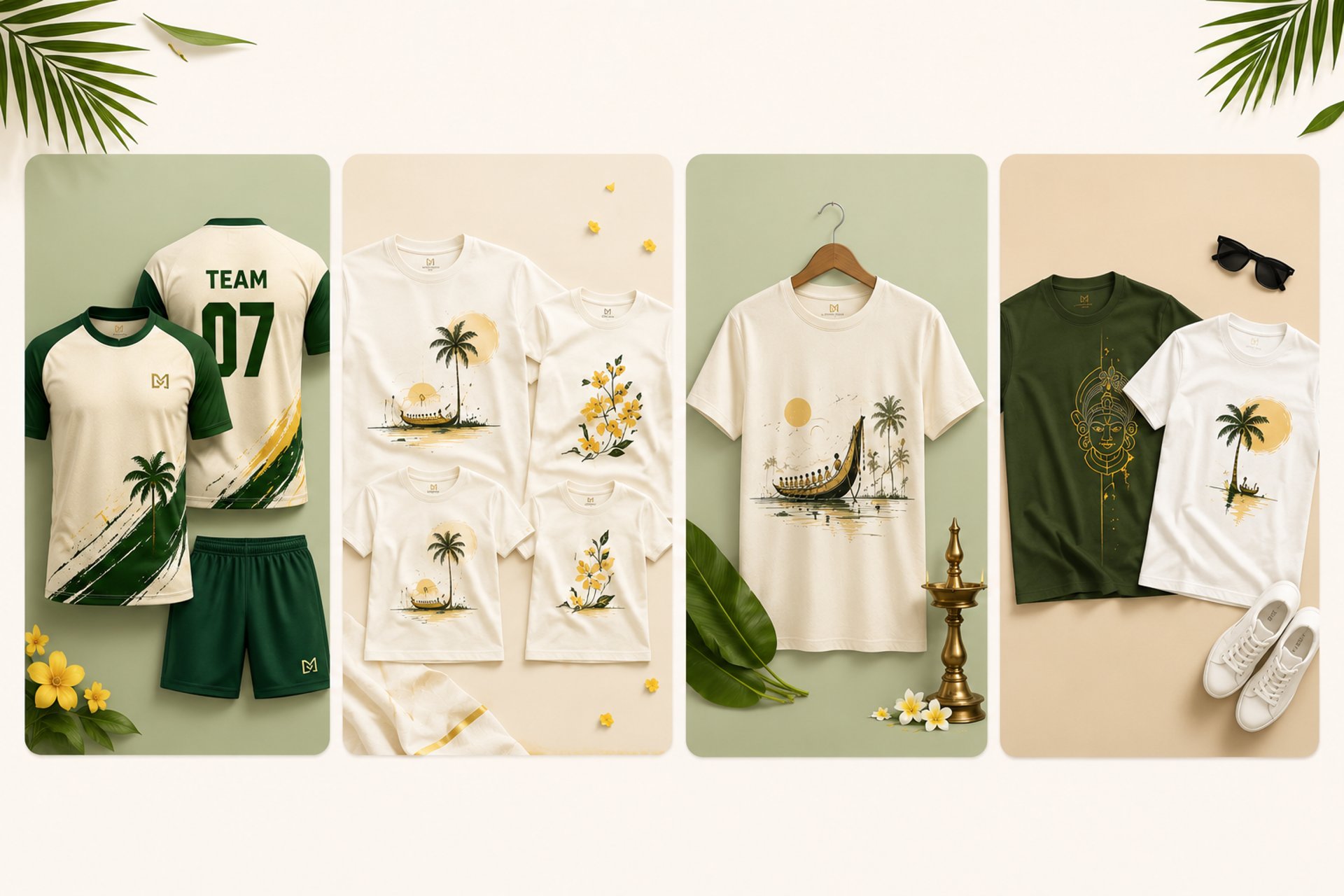

Which Fabric Is Best for T-Shirts? A Research-Based Guide to Choosing the Right T-Shirt Material
There is no single best T-shirt fabric for every person or every purpose. The best fabric depends on whether the T-shirt is being used for everyday wear, corporate events, school uniforms, sports, outdoor activities, fashion, promotional campaigns or bulk orders.


Which Fabric Is Best for T-Shirts? A Research-Based Guide to Choosing the Right T-Shirt Material
When buying a T-shirt, most people look at the colour, design, size and price.
But there is another decision that can make a much bigger difference to the wearing experience:
What fabric is the T-shirt made from?
Cotton, polyester, cotton-polyester blends, viscose, modal, lyocell and several other materials are used to manufacture T-shirts. Each has different characteristics.
So, which one is actually the best?
The honest answer is:
There is no single best T-shirt fabric for every person or every purpose.
The best fabric depends on whether the T-shirt is being used for everyday wear, corporate events, school uniforms, sports, outdoor activities, fashion, promotional campaigns or bulk orders.
Research into textile comfort shows that fibre type is only one part of the equation. Fabric weight, thickness, porosity, knitting structure, yarn characteristics and garment design can all influence air permeability, moisture management and thermal comfort.
Let's look at the most commonly used T-shirt fabrics and understand where each one works best.
1. 100% Cotton T-Shirts
Cotton remains one of the most popular choices for T-shirts, and there is a good reason for that.
Cotton is a natural fibre known for its comfort, moisture absorption and familiar soft feel. Research comparing T-shirt fabrics has found that cotton can perform well in moisture management, while other properties such as strength and stretch can favour blends.
Why choose cotton?
Cotton T-shirts can offer:
Comfortable feel
Good moisture absorption
Natural fibre content
Good everyday wearability
Versatility
Easy customisation
Wide range of GSM options
Cotton is particularly suitable for:
Everyday T-shirts
Corporate events
School events
College events
Promotional T-shirts
Family T-shirts
Casual wear
Custom printed T-shirts
For customers in Kerala, cotton is often an attractive option because comfort is important in a warm and humid environment.
However, not every cotton T-shirt is the same.
The quality can vary depending on:
Cotton quality
Yarn quality
Combed or carded yarn
Fabric construction
GSM
Finishing
Stitching
Shrinkage control
Therefore, simply saying "100% cotton" does not automatically mean "premium quality."
2. Combed Cotton T-Shirts
Combed cotton is another popular option for customers looking for a smoother and more refined T-shirt.
During combing, shorter fibres and impurities are removed from the cotton, leaving a more uniform fibre arrangement.
This can contribute to a smoother yarn and a cleaner fabric surface.
Combed cotton is often preferred for:
Premium corporate T-shirts
Custom printed T-shirts
College merchandise
Fashion T-shirts
Premium event apparel
Retail T-shirts
Research on knitted fabrics has also found that yarn characteristics, including combed versus carded yarn, can influence moisture transport and comfort.
Is combed cotton always better?
Not necessarily.
It can be a higher-quality option, but the final garment still depends on the complete manufacturing process.
A good T-shirt is the result of good fibre + good yarn + good knitting + good finishing + good garment construction.
3. Bio-Washed Cotton
Bio-wash is not actually a separate fibre.
It is a finishing process used to improve the surface characteristics of the fabric.
A bio-washed cotton T-shirt can have a smoother, softer and cleaner surface.
This makes it popular for:
Premium casual T-shirts
Corporate apparel
Fashion T-shirts
Custom T-shirts
Everyday wear
But remember:
Bio-wash does not automatically mean high-quality cotton.
It is a finishing treatment, not a quality rating.
4. Cotton-Polyester Blended T-Shirts
Cotton-polyester blends combine two different fibres to achieve a balance of characteristics.
A common example is a 50% cotton / 50% polyester blend.
The exact blend ratio can vary depending on the manufacturer and intended application.
Research comparing 100% cotton and 50/50 cotton-polyester T-shirts found interesting differences: cotton showed better moisture management in that study, while the blend demonstrated higher bursting strength and better stretch performance.
This illustrates an important point:
A blend is not necessarily better or worse than cotton. It simply behaves differently.
Cotton-polyester blends can be suitable for:
Corporate uniforms
Workwear
Promotional T-shirts
Staff uniforms
Bulk T-shirt orders
Regular-use apparel
They can offer a useful balance between comfort, durability and dimensional stability.
5. Polyester T-Shirts
Polyester is a synthetic fibre widely used in sports and performance clothing.
One of its important characteristics is low moisture absorption compared with cotton. This can allow moisture to move through suitable polyester structures and evaporate more readily.
Research into moisture management identifies polyester as a fibre commonly used for moisture transport because of its low moisture absorption and wicking behaviour.
This makes polyester particularly useful for:
Sports jerseys
Football jerseys
Cricket jerseys
Running T-shirts
Fitness apparel
Outdoor activities
Sports events
However, "polyester" alone doesn't guarantee excellent sports performance.
The yarn type, fabric structure and garment construction also matter.
Research on polyester/cotton knitted fabrics has shown that moisture and thermal comfort depend on factors including air permeability, water-vapour permeability, fabric structure and fibre characteristics.
6. Cotton-Polyester Blends for Sports
For sports and active use, blends can sometimes provide a useful compromise between comfort and performance.
Cotton contributes moisture absorption and a familiar natural feel, while polyester can help with moisture transport, durability and quicker drying.
Studies of knitted fabrics have found that fibre composition and fabric construction significantly affect moisture-management behaviour.
This is why a sports T-shirt should not be selected simply by asking:
"Cotton or polyester?"
The better question is:
"What type of activity will the T-shirt be used for?"
7. Performance Polyester
Performance fabrics are designed specifically for active use.
They may use specialised polyester yarns or fabric constructions designed to improve:
Moisture transport
Drying
Air movement
Comfort during exercise
Weight
Stretch
For sports events, marathons and fitness activities, these characteristics can be more important than the soft hand feel associated with cotton.
Research on sports and thermophysiological comfort has demonstrated that different polyester structures can significantly influence sweat retention and comfort during activity.
For a football tournament, marathon, corporate sports day or fitness event, a suitable performance fabric may therefore be a better choice than a conventional cotton T-shirt.
8. Modal T-Shirts
Modal is a regenerated cellulosic fibre known for its softness and smooth feel.
It is often used in lightweight and comfortable apparel.
Modal can be considered for:
Premium casual wear
Fashion T-shirts
Loungewear
Soft-touch garments
Lifestyle apparel
However, for large-scale corporate or institutional T-shirt orders, cost, availability, durability and printing requirements also need to be considered.
9. Lyocell / Tencel T-Shirts
Lyocell, including branded Tencel fibres, is another regenerated cellulosic option.
It is known for a smooth feel and good moisture-related comfort characteristics.
Research comparing knitted materials has found viscose and Tencel-based fabrics can demonstrate favourable air permeability and water-vapour resistance under particular fabric constructions.
These fabrics can be attractive for premium fashion and lifestyle garments, although they may not be the most practical option for every bulk T-shirt requirement.
10. Viscose T-Shirts
Viscose is another regenerated cellulosic fibre.
It can provide:
Soft feel
Good drape
Comfortable hand feel
Smooth appearance
It can be used in fashion-oriented T-shirts and blended fabrics.
As with other fibres, the actual performance depends on fabric construction and finishing.
So, Which T-Shirt Fabric Is Actually Best?
The answer depends on what you are trying to achieve.
Best for Everyday Comfort
Good-quality cotton
Cotton is a strong all-round option for everyday casual T-shirts.
Best for Premium Casual Wear
Combed cotton, bio-washed cotton or selected premium blends
These can provide a smoother and more refined wearing experience.
Best for Sports
Performance polyester or a suitable performance blend
Moisture transport and drying can become more important during physical activity.
Best for Corporate T-Shirts
Cotton, combed cotton, cotton blends or polo fabrics
The right choice depends on whether the T-shirt is intended for formal uniforms, casual events, employee activities or outdoor programs.
Best for School T-Shirts
Comfortable cotton or suitable cotton-blend fabrics
For school activities, durability, comfort, washability and cost are usually important.
Best for College T-Shirts
Cotton, combed cotton, heavyweight cotton, waffle or other fashion-oriented fabrics
The right option depends on whether the T-shirt is for a college fest, merchandise, sports event or everyday student wear.
Best for Sports Jerseys
Performance polyester
For active sports, moisture management and quick drying can be more important than cotton's absorbent feel.
Best for Bulk Promotional T-Shirts
Cotton or cotton blends
The decision should balance fabric quality, quantity, printing requirements and budget.
What About GSM?
GSM stands for Grams per Square Metre and describes fabric weight.
But GSM is not a quality score.
A 220 GSM T-shirt is not automatically better than a 180 GSM T-shirt.
A lightweight T-shirt may be more comfortable for a hot outdoor event, while a heavier fabric may be preferred for premium or oversized fashion.
The appropriate GSM depends on:
Fabric
Climate
Purpose
Fit
Printing
Budget
Customer expectations
Research also shows that fabric thickness, weight and construction influence comfort and moisture behaviour.
Fabric Structure Matters Too
This is something many customers overlook.
Two T-shirts made from the same fibre can perform differently because of differences in:
Knitting structure
Yarn thickness
Fabric density
Porosity
Finishing
GSM
Research into clothing comfort shows that air permeability and moisture management are affected not only by fibre type but also by fabric geometry and construction.
This means:
Cotton vs polyester is only one part of the decision.
What Is the Best Fabric for Kerala?
There is no single answer.
Kerala's warm and humid conditions make breathability, moisture management and comfort important considerations.
For everyday use, good-quality cotton can be an excellent choice.
For sports and intense physical activity, a suitable performance polyester can be more practical.
For corporate events, a cotton or cotton-blend T-shirt may provide a good balance between appearance and comfort.
For premium fashion, heavier cotton, waffle or other specialised fabrics can be considered.
The right choice depends on how the T-shirt will actually be used.
Fabric Comparison for Different Requirements
T-Shirt RequirementSuitable Fabric OptionsWhyEveryday wearCottonComfortable and versatilePremium casualCombed/Bio-washed cottonSmooth, refined feelCorporate eventsCotton / Cotton blend / PoloProfessional and comfortableSchool eventsCotton / Cotton blendPractical and comfortableCollege merchandiseCotton / Heavyweight cotton / WaffleFashion and durabilitySportsPerformance polyesterMoisture transport and dryingMarathonsPerformance polyesterLightweight and active useFactory/workwearCotton blendBalance of comfort and durabilityPromotional bulk ordersCotton / Cotton blendPractical and cost-effectiveOversized fashionHeavyweight cotton / WaffleStructure and visual appeal
What Should You Ask Before Buying Bulk T-Shirts?
If you are buying 100, 500 or 1,000 T-shirts, don't ask only for the price.
Ask the supplier about:
1. Fibre composition
Is it cotton, polyester, or a blend?
2. GSM
What is the actual fabric weight?
3. Yarn
Is it combed or carded?
4. Fabric construction
What type of knit is being used?
5. Shrinkage
Has the fabric been processed to control shrinkage?
6. Finishing
Is it bio-washed, pre-shrunk or otherwise finished?
7. Printing method
Is the selected printing method appropriate for the fabric?
8. Sample
Can you see and approve a physical sample before bulk production?
These questions can help you make a much better purchasing decision.
How Dominics & Marys Helps You Choose the Right Fabric
At Dominics & Marys, we don't believe that every customer should receive the same T-shirt.
A company ordering corporate T-shirts has different requirements from a school ordering event T-shirts.
A college fest needs something different from a marathon.
A factory may prioritise durability, while a fashion brand may prioritise fabric texture and appearance.
That's why we help customers select T-shirts based on the actual purpose of the garment.
We can help you evaluate options such as:
100% cotton T-shirts
Combed cotton T-shirts
Bio-washed T-shirts
Cotton-polyester blends
Performance polyester
Polo T-shirts
Sports jerseys
Waffle fabric
Loopknit
Oversized T-shirts
Premium fashion fabrics
We also consider:
GSM + fabric composition + fit + climate + usage + printing method + quantity + budget
rather than recommending a fabric based on just one specification.
Whether You Need 20 or 2,000 T-Shirts
Our custom T-shirt solutions are suitable for:
Companies
Corporate events
Schools
Colleges
Factories
Shops
Hospitals
Sports teams
Churches
NGOs
Events
Promotional campaigns
Family groups
Organisations
Whether you need custom T-shirts for a small team or bulk T-shirt orders for an organisation, we can help you identify a suitable garment for your requirement.
The Bottom Line
So, what is the best fabric for T-shirts?
There isn't one universal answer.
Cotton is an excellent all-round choice for everyday comfort.
Combed and bio-washed cotton can provide a smoother, more refined experience.
Cotton-polyester blends can offer a balance of comfort, strength and stretch.
Performance polyester is often more appropriate for sports and high-activity use.
Waffle, heavyweight cotton and other specialised fabrics can be excellent choices for fashion and premium apparel.
The most important lesson from textile research is that fibre type alone does not determine comfort or quality. Fabric construction, weight, yarn, finishing and the intended use all matter.
So instead of asking:
"Which is the best T-shirt fabric?"
ask:
"Which fabric is best for my requirement?"
That is the question that leads to a better T-shirt.
Need Help Choosing the Right T-Shirt?
Talk to Dominics & Marys before placing your next custom or bulk T-shirt order.
Tell us what the T-shirts are for, how many you need, who will wear them, where they will be used and your approximate budget. We can help you compare suitable fabrics, GSM, T-shirt styles and printing options for your requirement.
Dominics & Marys
Custom T-Shirt Printing & Bulk Apparel
Bank Junction, Angamaly, Ernakulam, Kerala
Call / WhatsApp: +91 97787 33646
Email: info@dominicsandmarys.com
Website: www.dominicsandmarys.com
Serving customers across Kochi, Ernakulam and Kerala with custom T-shirts, corporate T-shirts, school and college T-shirts, sports jerseys, event T-shirts and bulk custom apparel.
Address
Dominic's & Mary's
Custom Tshirt Printing
Bank Junction, Angamaly, Ernakulam
www.dominicsandmarys.com
Contacts
+919778733646 Info@dominicsandmarys.com
Corporate & Events T-Shirts
@dominicsandmarys.com All rights reserved.